

The best mental performance coaching program for an athlete who overthinks is both personalized and practical. It should help them understand what causes them to overthink, recognize how that might show up in their body and decisions, and practice a reset they can use during competition.
An athlete can look confident in practice and still feel trapped inside their own head when the game starts. They may begin cool, calm, and confident, but lose their focus once the game gets going. Inside an athlete’s mind, they may be struggling with perfectionism, the pressure to win, avoiding mistakes, worrying about disappointing someone, hesitating on their next move, focusing too much on what others are doing, trying to predict outcomes, and so on.
This can affect athletes at any level. Youth athletes may worry about disappointing a parent. Student-athletes may carry school stress or recruiting pressure into a game. College athletes may become concerned about playing time, recruiting, or expectations. Professional athletes may feel pressure to earn their contracts. The point is that overthinking can happen at any level in sport, and therefore, it’s a very common issue that athletes seek help with.
From the outside, the athlete may look prepared. Internally, they may be replaying the last play, thinking about the score, checking a coach’s reaction, or trying to predict what will happen next.
Parents and coaches often describe it simply: “They know what to do, but they cannot play freely” or “They do really well in practice, but shut down during games.”
A good coaching program helps an athlete identify their specific patterns and turns them into a training plan they can use in practice, competition, and life outside their sport.
Coaching styles can help or add to the problem
Some athletes begin mental performance coaching after another approach left them frustrated. They may have been told they already had the answers or given advice that sounded good in a conversation but was ambiguous or difficult to use during competition. And others have worked with coaches who gave them a system, but it wasn’t personalized to them with tools that they aligned with.
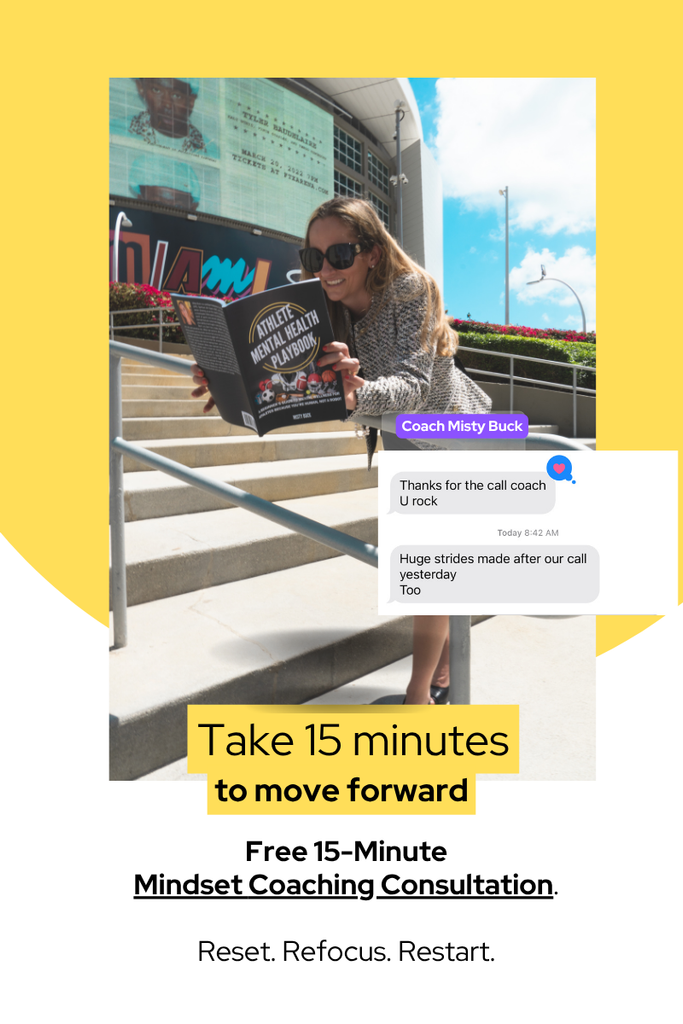
As one athlete put it, “It wasn’t the greatest experience. The coach said that I had all the answers already. What I was looking for were tangible things I can change, not things I already know.”
“The ability to meet someone where they are and provide them with personalized systems and tools is essential to a successful coaching program,” says Misty Buck, a mental wellness and performance coach. “There has to be a combination of individualized support that helps the person feel seen, understood, and validated. Along with that, you need both a goal and a plan to reach it so that we build in accountability and leadership. In that regard, it’s similar to coaching athletic ability. There has to be an adaptable framework within a space that allows for individual expression.”
In a perfect example, Fred Warner was interviewed on The Pivot podcast about a time when he was struggling in his NFL career.
“I went into that camp, and I wasn’t performing like I was supposed to,” he said. “I remember I went into that season and I was thrown off the whole year. I started letting that outside noise fester in my brain a lot. It took me reaching out to a sports psychologist that I followed on Twitter.
“Jim Renfro … I still haven’t even met him to this day. It was all over the phone. We talked through things. He told me, ‘You’re the lion, at the end of the day. Sometimes the Lion doesn’t get the kill. That doesn’t mean that they’re not a Lion.’ That saved me. That saved my entire career.”
Helping an athlete build confidence is about connecting them with what ultimately resonates with them. In one-on-one coaching, athletes have the space to identify what happens before, during, and after competition. The coach can then help build tools around the athlete’s sport, age, experience, personality, goals, beliefs, and schedule.
As an alternative, group or team programs and self-guided options can also help. The right format depends on how much personal feedback, practice, and support the athlete needs.
Why athletes overthink during competition
Overthinking can occur due to a fear of making a mistake, focusing too much on results, after an injury or a losing streak, a result of the yips, a perfectionist mindset, or for no clear reason at all. Overthinking does not mean an athlete is weak or unprepared. Many athletes who struggle with this do so because they care deeply about their performance and are trying to prevent an outcome they cannot fully control. That extra mental work can lead to hesitation, tension, rushed decisions, or cautious play.
Common reasons why an athlete might overthink:
- Fear of failure
- Perfectionism
- Trouble locking in
- Having a “head on a swivel” mentality
- Anxiety
- Desire for control
- Overly focused on the outcome
- Pressure to perform well
- Being on a losing streak
- Struggling with the yips
- Feeling burnt out
What might happen when an athlete overthinks:
- Rehearse mechanics over and over again
- Try to predict failure by considering all possible scenarios
- Look toward the coach after every mistake
- Become overwhelmed by physical signs of anxiety
- Lose the ability to lock in after a mistake
- Explosive emotions like anger
PurposeSoul® Athletics also has a guide on why athletes overthink and how to begin changing the habit.
“If you don’t have confidence, you’ll always find a way not to win.” – Carl Lewis
What should an effective program include?
An effective athlete mental coaching program should take a holistic, individualized approach. It should be non-clinical and offer uncomplicated support for both quick and long-term wins. For example, while some athletes prefer a spiritually-led approach and others want to understand the “why” behind every tool, all individuals need to know that they are making progress in the present and have a plan for continuing to improve in the future.
“Whether I’m coaching one-on-one or in a group setting with a team, I’m sharing multiple viewpoints and multiple tools,” says Misty Buck. “As one athlete told me after a workshop, ‘I really loved that you gave a bunch of different exercises because some people come in here and just give us one or two, but you provided enough options for everyone to choose what works for them.'”
1. A clear picture of the athlete’s overthinking pattern
As stated earlier, “overthinking” can describe several experiences.
A coach can help the athlete identify:
- What beliefs they have about their performance
- The situations that usually trigger overthinking
- The thoughts, images, or questions that appear
- What changes in the body
- What the athlete tends to do next
- What helps them return to the present moment and lock back in
2. Short attention cues the athlete can use during competition
There is rarely time for a long mental exercise during a possession, race, routine, shift, or at-bat. The athlete needs a simple cue that directs attention toward what matters now.
Depending on the sport, that cue could be the ball, breathing, body position, the next read, a tactical instruction, an affirmation, a physical action (like clapping hands or snapping a wristband), a specific visual focal point, or a different reset cue. The coaching program should present different exercises and cues that can be practiced at different times with the goal of the athlete getting in the mental reps to train their concentration and focus while finding what works best for them.
3. A way to respond to thoughts without fighting them
Trying to force the mind to go blank can create another problem. The athlete notices a thought, decides it should disappear, and then gets frustrated when it doesn’t go away. The problem is that by trying to force the reset, they’re still in a place of resistance; thus, the frustration grows as they continue going in mental circles.
Instead, the individual can learn to notice what is happening, name it briefly, and return to a chosen cue through learning skills such as mindfulness practices.
Constant calm is not required for effective performance. Sports are inherently emotional. The aim is to help the athlete respond well when their mind becomes busy by connecting and calming their mind and body.
4. Skills that address the body and emotions
Overthinking may result in the onset of a fight-or-flight state that triggers the nervous system to respond with shallow breathing, muscle tension, urgency, frustration, or a frozen response. An athlete may understand the situation logically and still need help settling their physical response.
Coaching may include breathing, grounding, emotional labeling, pre-performance routines, or ways to adjust energy. PurposeSoul® Athletics provides non-clinical mental performance and mental wellness coaching that also includes mindfulness, meditation, and spiritual grounding when those approaches fit the athlete.
5. Progress measures the athlete can see
Success does not mean that the athlete never overthinks again. The reality is that thoughts will still happen, and therefore, the goal is to know what steps to take to calm the mind and body.
Wins, statistics, and playing time do not always give a complete picture of whether mental performance coaching is helping. The athlete and coach should identify the specific mental skill they are working on and review how it is changing in both practice and competition.
For an athlete who overthinks, that review may consider:
- If an athlete used to get stuck after a mistake, are they moving forward sooner?
- Are they second-guessing fewer decisions?
- Can they catch themselves overthinking and use their reset during competition?
- Are they keeping their attention on what is happening right now?
- How often are they able to return their attention to the present when they lose focus?
- Is their confidence improving?
These areas can be rated at the beginning of coaching and revisited throughout the program. Feedback from a coach or parent may provide added context, but the athlete’s experience should remain central to the review. This gives the athlete a more accurate way to see progress, especially when the outcome of a competition does not reflect how they performed mentally.
Questions to ask before choosing a mental performance coaching program
Most mental performance coaches will offer a consultation. Ask questions such as:
- How do you assess what overthinking means for each athlete?
- How do you separate a technical issue from a confidence, attention, or anxiety concern?
- What will the athlete practice between sessions?
- How will the athlete learn to use the tools during competition?
- How do you review progress when results change from week to week?
- What experience do you have with athletes at this age and competitive level?
- What training and credentials guide your work?
- How do you handle confidentiality?
- What is your system for parent communication for minors?
- When would you refer an athlete to a therapist, physician, or another licensed provider?
- What is included in the fee?
It’s also important that you’re comfortable with the coach and don’t feel pressured into working with them. Mental performance coaching is about the relationship and trust as much as it is about the results.
“Competitive sports are played mainly on a five-and-a-half inch court — the space between your ears.” – Bobby Jones
When mental performance coaching is not enough
Mental performance coaching is not therapy. Symptoms that are severe, persistent, unsafe, or disruptive beyond sport should be assessed by a licensed mental health professional. This includes panic, depression, trauma symptoms, disordered eating, self-harm, substance misuse, or significant difficulty functioning in daily life. An ethical coach understands the limits of coaching and refers the athlete when clinical support may be needed. Coaching can sometimes continue alongside therapy when each provider remains within their scope.
Mental performance coaching with PurposeSoul® Athletics
PurposeSoul® Athletics offers individualized, non-clinical coaching for athletes who want help with overthinking, confidence, focus, emotional regulation, and resilience. Coaching is available to athletes across competitive levels, including youth athletes, student-athletes, college athletes, professionals, and athletes adjusting to life after competition.
Misty Buck’s approach combines practical mental performance skills with space to talk about the person behind the performance. Each athlete develops strategies around their actual experiences instead of following a fixed script. Coaching is available virtually, with limited in-person availability in South Florida.
Learn about one-on-one mental performance coaching or explore mental performance coaching for student-athletes.
Frequently asked questions
Can mental performance coaching stop overthinking completely?
The goal is to help the athlete recognize an unhelpful pattern sooner and know how to respond. They can learn to redirect attention, settle their physical response, and compete effectively even when thoughts or nerves are present.
How long does mental performance coaching take to work?
There is no single timeline. Progress depends on the athlete’s goals, consistency, competition schedule, level of concern, and opportunities to practice. A coach should set an early review point and discuss observable changes without promising a fixed result.
Is overthinking the same as performance anxiety?
Not always. Overthinking may involve mechanics, decisions, perfectionism, mistakes, or possible outcomes. Performance anxiety can include stronger mental, emotional, and physical symptoms. A qualified provider should clarify what the athlete is experiencing and recommend clinical assessment when appropriate.
Should a parent attend coaching sessions?
This depends on the athlete’s age, the coach’s policy, and the goals of the program. A parent may attend part of an initial or review session, while the athlete also has private time with the coach. These expectations should be discussed before coaching begins.
Does the mental performance coach need to have played the athlete’s sport?
Experience with the sport can help, although playing history alone does not show that someone is qualified to coach mental performance. Ask about the coach’s training, method, scope, and ability to understand the athlete’s environment. The coach should also explain how the athlete will practice each skill within their sport.
Photo credit: Photo by Peter Zhan on Unsplash