

NFL players hire mental performance coaches outside the team when they want individualized support from someone who has no role in evaluating their roster position or playing time. Some professional athletes prefer independent consultants because they do not want the coaches or staff knowing that they are mentally struggling. It’s not because the in-house therapists aren’t qualified or don’t abide by confidentiality agreements; it’s often a preference based on trust factors, wanting different options, and ensuring full confidentiality so that no one will see them speaking with the in-house person.
A private coach can help a player work through a variety of mindset blocks such as overthinking, rebuilding confidence after a setback, feeling pressure or overwhelm, or wanting to learn how to focus better in a safe space that allows the player to discuss personal concerns outside his workplace. That relationship can continue through a trade, claim, coaching change, free agency, or other factor, ensuring that no matter who they play for, their mental coach will not change.
Choosing an outside mindset coach can complement the support available through the team, too. The value is having someone the player chooses independently, with clear boundaries around who has access to their conversations. Players should understand those boundaries before assuming that “private coaching” means everything they share is protected.
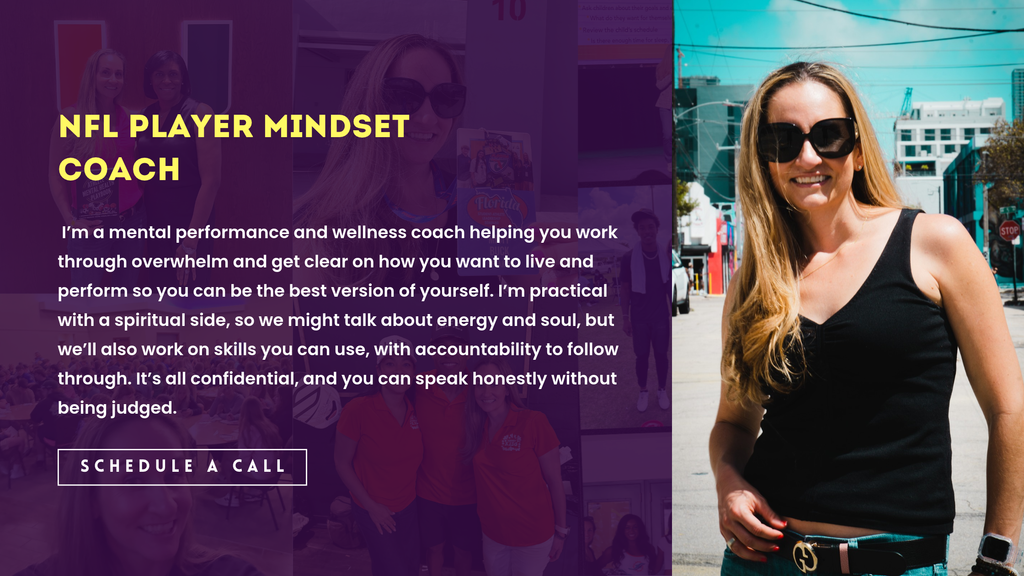
At PurposeSoul® Athletics, Misty Buck provides non-clinical coaching that connects mental performance with mental wellness, helping athletes address what is happening in their mindset and how it carries into competition and life. Through mental conditioning and skills like mindfulness, Misty supports athletes in learning how to strengthen their mindset and manage their emotions and thoughts. Her goal is to provide a confidential, safe space where athletes can speak in confidence and set goals to become the best versions of themselves.
Why choose a mental performance coach outside the team
In recent years, the NFL and other professional sports organizations have made great strides in offering mental health support to their players. Still, some players aren’t comfortable using the in-house or league resources.
That hesitation can exist even when confidentiality policies are in place. A player may understand that a conversation is private and still find it difficult to discuss doubts about his performance with someone employed by his team. For example, concerns about a coach’s expectations and comments, or frustration over playing time, can be easier to address outside the organization where decisions about his career are being made.
An independent mental performance coach can provide that separation. The relationship gives the player an opportunity to examine how those experiences are affecting his confidence and practice ways to respond. Sessions can also address personal concerns that are taking his attention away from preparation or competition.
Continuity is another consideration. A trade or release can change a player’s access to familiar team personnel. An outside coaching relationship may continue through those changes, allowing him to work with someone who already understands him and his goals.
Players can use private coaching alongside team resources. The choice depends on the support they need and whom they trust enough to speak openly with. An outside coach’s qualifications and confidentiality practices deserve the same careful review as any other professional brought into a player’s support system.
Choosing outside support does not mean that team resources lack privacy. The NFL describes confidentiality as a central part of its mental wellness services and requires each club to have a licensed mental health clinician. A player may simply feel more comfortable with an independent coaching relationship.
What an NFL mental performance coach can help you practice
In her work with players, Misty Buck helps them navigate changes in their careers and manage the pressure to perform. A player may be adjusting to a new team or trying to regain confidence after losing playing time. Coaching provides a place to work through how those circumstances are affecting him and develop a response that supports his goals.
Keep in mind that coaching is not therapy and not a place for a mental health issue to be diagnosed. (For more details on this, read: Coaching vs. Therapy for Athletes: Which One Do You Need?)
Managing overwhelm and the expectations of performance
The demands of professional football exist alongside personal responsibilities. When a player is already concerned about his performance, expectations from family or commitments away from the team can make it harder to give his attention to what is in front of him.
Misty helps players examine what is contributing to that overwhelm and recognize where they have choices. That can include setting boundaries or developing ways to settle their thoughts in high-pressure moments, on or off the field. The work gives players tools to manage their response when several parts of life demand their attention at once.
Learning to respond rather than react
A frustrating exchange in the film room can carry into practice. An emotional reaction on the field can result in a penalty, while a personal conflict can lead to a decision with consequences beyond that moment.
Part of Misty’s work is helping players recognize what is happening before they react and practice creating enough space to choose their response. Her philosophy is “The future happens in the present™,” which is a strong reminder to her clients to pause before reacting.
Decisions made in an emotional moment can affect opportunities a player has worked years to earn. For this reason, emotional regulation through self-awareness and mindfulness often comes into play as skills that she helps athletes develop. For instance, they can acknowledge frustration while considering what their next action could mean for their future. Or, they can maintain confidence and focus in tough situations. They can also learn how to minimize mental errors and penalties through mental conditioning.
Preparing with confidence in the effort invested
Players cannot control every outcome, but they can take ownership of their preparation. Mental performance coaching helps them give their inner game the same deliberate attention they bring to physical training.
Misty works with players to identify aspects of their mindset that need attention and develop skills they can apply consistently. The aim is for them to compete knowing they have invested fully in their preparation, with tools to handle setbacks when they occur.
“You wouldn’t expect your physical performance to improve without consistent reps, so why would your mental conditioning be any different?” – Misty
That work extends beyond football. Her approach supports players in pursuing success while becoming better equipped to live as the people they want to be, including when their careers or circumstances change.
What confidentiality covers in private coaching
For a professional athlete, confidentiality includes the content of a session and whether anyone knows the session took place. Those expectations should be addressed before coaching begins. A written agreement should explain how the coach handles personal information and identify any limits to confidentiality. Players should have a clear understanding of whether anyone else can access session notes or receive information about their progress.
Payment arrangements are another factor to consider. If an agent or another representative pays for coaching, the agreement should establish what that person receives. Billing information and updates about the substance of sessions should be addressed separately, so the player understands what he is authorizing.
Before starting, players should ask:
- Will the coach disclose that the player is a client?
- Who can access session notes or messages exchanged between appointments?
- Are sessions recorded, transcribed, or processed through AI tools?
- What happens if a team representative or agent requests information?
- Is separate permission required before the coach uses the player’s name, image, or experience publicly?
- Under what legal or safety circumstances could information be disclosed?
The Association for Applied Sport Psychology’s ethics code requires its members and Certified Mental Performance Consultants to explain confidentiality limits and clarify their responsibilities when a third party arranges or pays for services. Players should expect a clear discussion of these issues from any coach they consider.
Private coaching also should not be assumed to carry the same legal protections as clinical care. HIPAA applies to covered entities and their business associates. The title “mental performance coach” alone does not establish whether those rules apply.
A coach should be able to explain these boundaries in plain language before asking a player to speak openly. That discussion gives the player a basis for deciding what to share and whether to proceed.
How to vet a coach for discretion and fit
An NFL player evaluating a mental performance coach should look closely at the coach’s qualifications and how they approach the concerns he wants to address. A referral from another athlete can be useful, but the consultation should establish whether that coach is a fit for his circumstances.
The coach should be able to explain what sessions involve and how the work carries into situations the player encounters. For someone struggling with emotional reactions during competition, that means explaining how they would help him recognize those moments and practice a different response. General promises about building a winning mindset offer little basis for evaluating the service.
Players should ask:
- What training informs the coach’s work, and how does it relate to the player’s needs?
- How would the coach approach the specific concern the player wants to address?
- How will they assess progress and adjust the work if it is not helping?
- Does the coach have relationships with the team or the player’s representatives that could affect their independence?
- When would the coach recommend support from a licensed mental health professional?
- What availability can the coach realistically provide during the season?
Discretion should be evident in how the coach discusses previous work. Relevant experience can be explained without revealing another athlete’s private concerns. A coach who shares sensitive details to impress a prospective client gives that player reason to question how his own information would be handled.
Clear professional boundaries matter as well. A coach should explain the limits of their qualifications and recognize when a concern requires clinical care. Claims that coaching can diagnose or replace medical treatment are a red flag.
The consultation also gives the player an opportunity to assess the working relationship. He should have room to ask difficult questions and disagree without being pushed toward a commitment. Before enrolling, he should understand what he is paying for and what both parties will be expected to contribute.
How outside coaching complements team resources
Outside coaching can give an NFL player additional support while he continues using the resources available through his team. Each professional should have a clear role, with the private coach’s work respecting the guidance of those responsible for the player’s care.
During injury rehabilitation, for example, a player may work with Misty on managing frustration and maintaining confidence as his role changes. A player may also use that time to learn meditation or mindfulness skills that will help in recovery and when they return to the game. That coaching supports his response to the recovery process. Decisions about rehabilitation and clearance to play remain with his medical team.
A player receiving mental health treatment may also work with a private coach on applying mental performance skills during competition. The coach should stay within their qualifications and recognize when a concern needs to be addressed by the treating clinician.
Communication between professionals can be useful when there is a specific reason to coordinate. Before that happens, the player should understand the purpose of the conversation and authorize what information can be shared, subject to applicable legal or safety obligations. An introduction from an agent or team representative should never leave those expectations unclear.
The NFL’s mental wellness resources include team clinicians whose work carries confidentiality obligations. The NFLPA also outlines counseling options available beyond the club facility. Understanding those services helps a player decide where private coaching would add value to his existing support.
Why NFL players speak privately with Misty Buck
Misty Buck’s work brings mental wellness and mental performance into the same conversation. Through PurposeSoul® Athletics, she helps athletes develop practical skills for managing their mindset while making room for the personal concerns that accompany competition. Her private coaching is non-clinical and does not replace therapy or medical care.
If you have been wondering, “Would a private coach outside my team help me?” you can begin by discussing what you want support with and asking how the coaching relationship would work.
Book a free 15-minute confidential consultation with Misty Buck to discuss your goals and whether private coaching is a fit. You can ask about confidentiality and its limits before sharing sensitive details.
Photo by Isaac Lind on Unsplash