
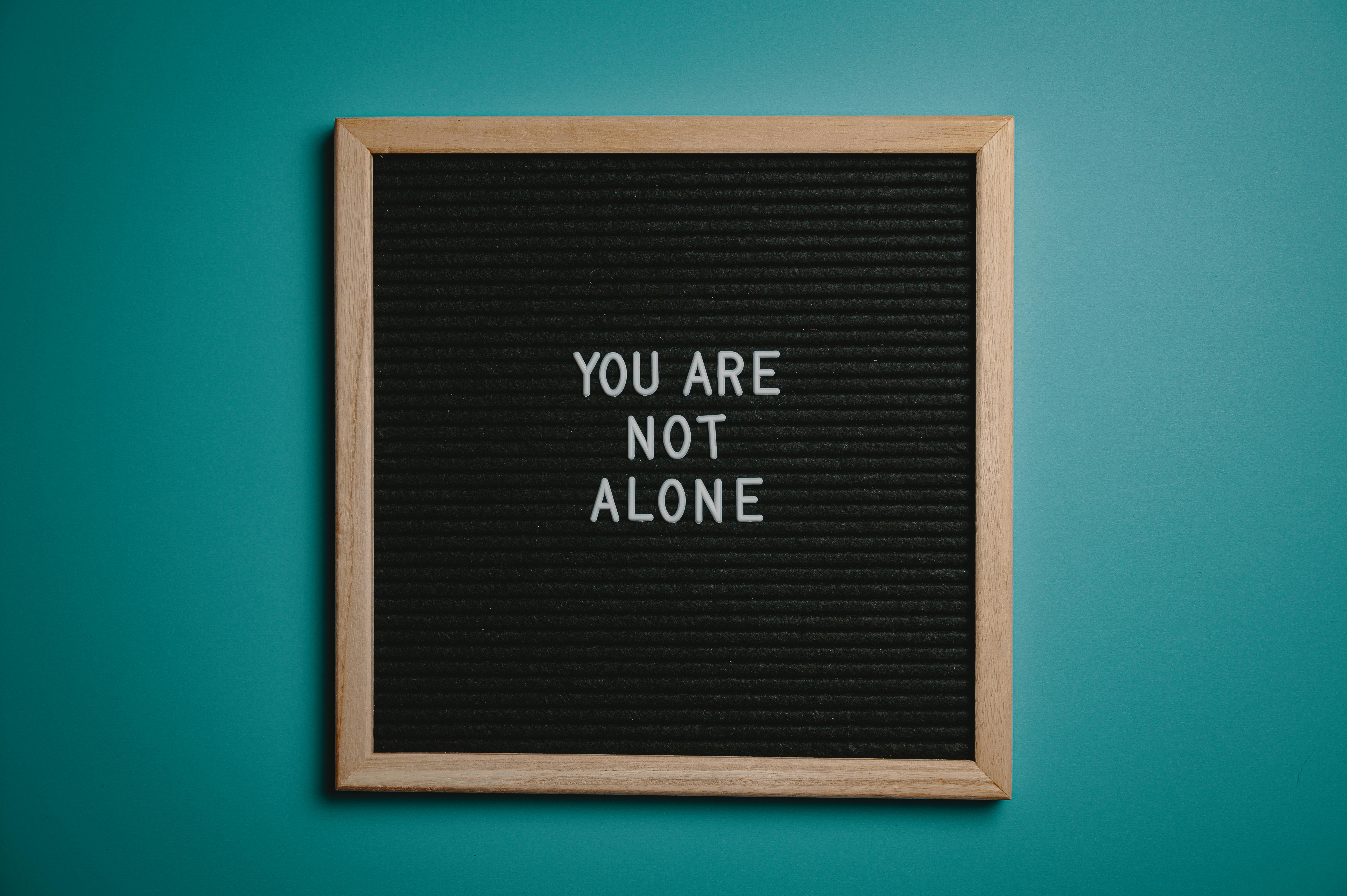
Talking about your mental health can be one of the hardest things you do. Not because you are weak or dramatic or there is something wrong with you, but because the moment you decide to speak, you become vulnerable. You let someone see a part of you that you usually manage in silence.
As an athlete, high performer, or leader, you may struggle with this because you are used to pushing through, staying strong, and telling yourself that when life gets heavy, you can handle it on your own. However, this isolation can take a monumental toll with significant consequences.
“I found that with depression, one of the most important things you can realize is that you’re not alone. You’re not the first to go through it, you’re not gonna be the last to go through it,” — Dwayne “The Rock” Johnson
“I say put mental health first. Because if you don’t, then you’re not going to enjoy your sport and you’re not going to succeed as much as you want to.” – Simone Biles
How do I start a conversation about my mental health
Start by saying what you feel without judging it (or yourself). Choose one person you trust. Keep it simple and honest. You do not need perfect words. You only need a first step.
Let’s dig into this further.
Common Blocks That Keep Us From Speaking Up
Talking about your mental health is not easy. There are deep reasons you may hesitate or stop yourself before the words even form. Whether you have tried to have a mental health conversation before or if the idea just seems too ridiculous, know that these blocks are normal.
To speak up about your mental health, one of the first steps is to acknowledge what’s holding you back. Understanding this helps you shift the story you tell yourself so you can move toward support instead of silence. Take some time to reflect on this.
“The experience I have had is that once you start talking about [experiencing a mental health struggle], you realize that actually you’re part of quite a big club.” — Prince Harry
11 Common Blocks That Might Keep You From Asking for Help With Mental Health
Imagine if you found out a loved one was suffering in silence. You’d want them to open up to you or get help. With this frame of mind, let’s address some common blocks that may be holding you back from being the one who speaks up and sets the tone that it’s okay to not be okay.
1. Fear of being a burden
Block: You worry that others have enough on their plate.
Shift: Sharing builds connection. We all have emotions and challenges that connect us. The conversation may help them as well.
2. Not knowing what to say
Block: You feel pressure not to say the wrong thing.
Shift: Mental health isn’t something that’s right or wrong. Honest words are enough.
3. Minimizing what you feel
Block: You tell yourself it is “not that bad” or “other people have it worse.”
Shift: If it affects you, it matters.
4. Fear of judgment or looking weak
Block: You worry that people will see you differently.
Shift: It’s better to be loved for who you are than for who you are not.
5. Fear of losing opportunity
Block: You wonder if speaking up will affect your role, playing time, trust, or leadership.
Shift: Your well-being is part of your performance. Protecting it protects your future.
6. Cultural or religious expectations
Block: You were raised in a home or community where talking about emotions was discouraged, or where mental health was viewed through a different lens.
Shift: You are allowed to heal in a way that supports your growth, even if it looks different from what you were taught.
7. Feeling like no one will understand you
Block: You believe your struggle is too complicated or too personal.
Shift: Understanding begins when you speak. Chances are, someone will say, “Me too.”
8. Feeling like the words will not come out
Block: Sometimes you want to speak, but your throat tightens, your mind races, or your body freezes. Your nervous system may try to protect you.
Shift: You’re not being chased by a tiger. There’s no real threat. Start with one honest sentence.
9. Thinking you should handle everything on your own
Block: You pride yourself on being the strong one. The reliable one. The one who does not fall apart.
Shift: You are an example of a strong leader in your community when you are vulnerable and address your mental health. You set the tone for your loved ones that it’s okay to not always be okay.
10. Fearing that you’ll cry or break down
Block: You’re afraid that you’ll cry or break down in front of the person you’re speaking to.
Shift: Everyone has emotions. Everyone cries. It’s a natural outlet for the body, mind, and soul.
11. Thinking it’s too late to get help.
Block: You feel like you’ve done everything, or you’re in such a dark place that it’s too late for you to get help.
Shift: There are always solutions, even when you can’t see them. Everything is temporary. No one is permanently broken, and no obstacle is insurmountable. You are strong enough to fight another day. Always choose life. Better days are ahead.
How to Shift Your Narrative Before You Talk
“Until you make the unconscious conscious, it will direct your life and you will call it fate.” — Carl Jung
Before you speak to someone, you may need to devise a game plan about the way you talk to yourself. You may be all set to have a conversation, and then your brain may try to trick you with old negative thought habits.
Here are examples of self-talk shifts you can make:
“I should be able to handle this” becomes “I am allowed to seek support.”
“My feelings do not make sense” becomes “I can share what I know right now.”
“They might not understand” becomes “Understanding starts when I speak.”
“I do not want to make this a big deal” becomes “This matters because I matter.”
You can also ground yourself before you speak.
- Sit still.
- Place your feet on the floor.
- Take one slow breath.
- Say an affirmation out loud or in your mind: “I deserve support. I am being brave when I am vulnerable.”
How to Start the Conversation
“Anything that’s human is mentionable, and anything that is mentionable can be more manageable. When we can talk about our feelings, they become less overwhelming, less upsetting, and less scary.” — Fred Rogers
Now that you’ve addressed any potential blocks and prepared a self-talk strategy to keep you from losing your nerve, here are some simple ways to start a mental health conversation. These work with friends, family, coaches, mentors, or professionals. Pick the one that feels the most natural to you.
Option 1
Opening: “I have been having a hard time, and I want to talk about it.”
Follow with: “I am not sure where to start, but I want to get this out.”
Option 2
Opening: “I have been struggling lately.”
Follow with: “I do not need you to fix anything. I just need someone to listen.”
Option 3
Opening: “Can I share something that has been on my mind?”
Follow with: “This isn’t easy, so thanks for being here to listen.”
Option 4
Opening: “I need someone to talk to, and I trust you.”
Follow with: “I don’t like asking for help, but I trust you to hear me out.”
Option 5
Opening: “I do not feel like myself lately.”
Follow with: “But, I don’t want to give up on myself. I want to keep fighting for better days.”
Option 6
Opening: “Something has been weighing on me.”
Follow with: “Saying it out loud feels like the next step. Talking through it might help me get some clarity.”
Option 7
Opening: “I tried handling this on my own, and it is starting to catch up to me.”
Follow with: “I want to talk before it gets heavier.”
What To Expect After You Share
You may feel relief.
You may feel vulnerable.
You may feel a release you did not expect.
You may even second-guess yourself for a moment.
All of that is normal.
What matters is that you did not carry it alone. Speaking creates space. Space creates clarity. Clarity helps you take your next step with confidence.
When You Need Professional Support
It may be time to talk with a therapist or counselor if:
- Your emotions feel too heavy.
- You cannot shake certain thoughts.
- Life feels overwhelming most of the time.
- Your mental health is interfering with your daily life and enjoyment.
If you are an athlete or high performer who wants help with emotional regulation, mental skills, or grounding practices, my private coaching can support you, or help you find the right resources that can.
If you are in immediate crisis, dial 911 or 988.
Remember, starting the conversation does not mean being perfect. One moment of truth can change the entire direction of what you have been carrying. It can change the trajectory of your life.
- You do not have to wait for the perfect words.
- You do not have to wait for everything to make sense.
- You do not have to wait for a better time or to hit rock bottom.
Your voice matters. Your feelings matter. You matter. Right now.
Related Articles
- How to Have Difficult Conversations
- Normalizing Courageous Conversations About Mental Health for Athletes
- Why Men Have a Hard Time Opening Up and Being Vulnerable
- Why is it good to talk about mental health
FAQ: How to Start a Conversation About Your Mental Health
Begin with one honest sentence. You do not need a complete explanation. You can say something as simple as, “I have been struggling and I want to talk about it.” The goal is to open the door, not deliver a perfect speech
Choose someone you trust. This may be a friend, teammate, family member, coach, or professional. If you’re not comfortable going to someone in your inner circle, seek out a therapist or dial 988.
This is more common than you think. Take one slow breath. Look at the ground or a still point. Then repeat one simple line, such as, “I am trying to share this and it feels hard.” Honesty creates a connection even when the words feel stuck
If it affects you, it matters. If your thoughts or emotions feel heavy, confusing, overwhelming, or hard to carry alone, it is worth talking about. You do not need a crisis to ask for support.
You cannot control someone’s reaction, but you can choose someone who has shown care and consistency. Understanding often begins with the first conversation. You are not responsible for how someone responds, only for being honest about what you feel.
Keep it simple and direct. You can say, “I have been having a hard time and I need to talk about my well-being.” You do not have to share every detail. Share only what feels appropriate. Think about the outcome that you’d like, such as if you’re looking for a resource to work on your mental health.
Talking about your mental health shows honesty, responsibility, and awareness. It is a sign of strength, not weakness. You are taking care of yourself before your situation becomes heavier. That is courage. It also sets the tone that you are a courageous leader who is willing to be vulnerable if it means gaining strength.
Take a slow breath. Name what you feel without judging it. You can also write down one or two sentences you want to say. Remind yourself that you matter. The most courageous thing you can do is speak up for yourself.
Their response does not define your worth or the importance of what you shared. It may just mean that they are not equipped to support you. You can choose someone else who is more supportive. You can also reach out to a professional who is trained to listen and guide you through the next steps. Dial 988 in a mental health crisis.
If your emotions feel overwhelming, if your daily life is affected, or if you feel stuck in patterns that are hard to break, a therapist or counselor can help. But you don’t have to be suffering to gain benefits from speaking with a mental health professional. Professionals provide tools, clarity, and guidance that friends or family may not know how to offer.